Old Veggie Gardens
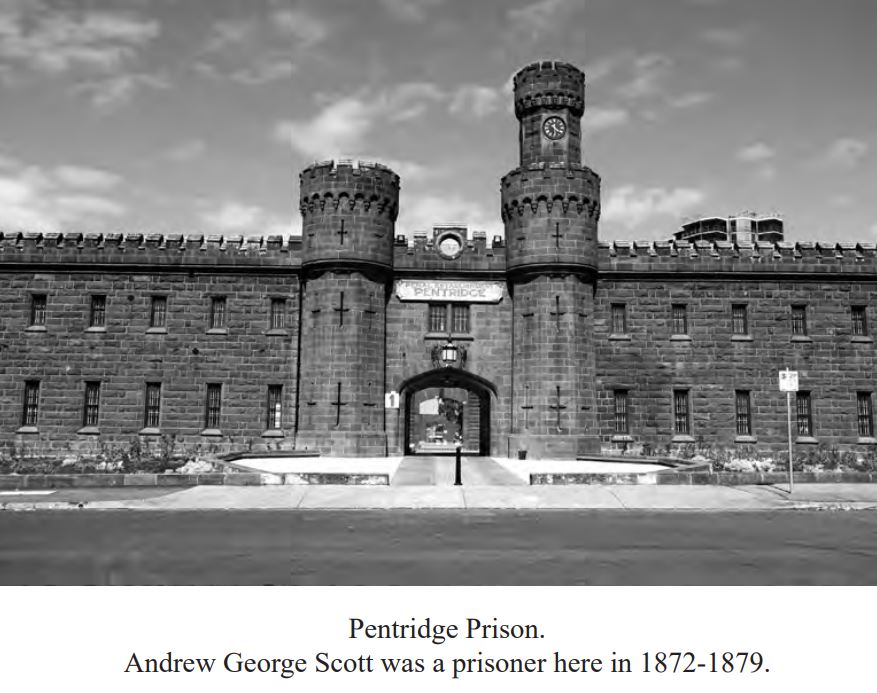
In 1872, Andrew George Scott—better known as Captain Moonlite—was tried for the Mt Egerton Gold Robbery. Although initially sentenced to 18 months for passing a false check worth £150, it was later discovered that he had sold a gold cake valued at nearly the same amount as the money stolen from Mount Egerton. This discovery led to Scott being extradited to Victoria and retried for the robbery. However, not long into his time at the Ballarat Gaol, Scott escaped with six other men, in a daring escape over the prison walls after digging into the next cell and ambushing a guard. All but one of the escapees were recaptured. In June, Scott stood trial and was sentenced to 10 years in prison. He served approximately two-thirds of his sentence at Pentridge Gaol before being released in 1879.
Scott’s time in prison was marked by a a number of incidents. On Thursday, February 15, 1877, he held up a guard, which led to his isolation after threatening the officer. However, rather than curbing his behaviour, the isolation only seemed to fuel his defiance, and Scott continued to cause disruptions throughout the prison system.
After his release, Scott spoke candidly about the harsh realities of prison life. He described conditions at Pentridge, noting that prisoner blankets were washed only once a year, with a dozen men using the same bedding at different times, which led to the spread of contagious diseases. The Ballarat Courier, in April 25 1879, quoted Scott’s damning assessment of the prison system, stating that it was “a curse instead of a reformatory.”
Ballarat Star (Vic. : 1865 – 1924), Thursday 15 February 1877, page 2
National Library of Australia http://nla.gov.au/nla.news-article199826838
“CAPTAIN MOONLIGHT” SCOTT ONCE MORE.
Considerable surprise and alarm were excited in Pentridge Stockade about noon on Tuesday (says the Argus) by the intelligence that Chief Warder Kelly had been stuck up in his office by the notorious Scott, alias: Captain Moonlight, who demanded his watch, threatening to murder him with- a large dinner-knife which he held in his hand, in case of refusal. Scott is in the habit of having a bath on returning from forenoon labor. He went as usual to the bathroom and upon leaving it walked to the chief warder’s (Kelly’s) office, stating he wished to speak to him. Kelly enquired what he wanted.
– Scott-replied, to have his name put down to see the inspector-general or a visiting, justice. Scott retreated from the office, and looking round to ascertain that no one was present returned and closing: the door after him walked up to Kelly’s table saying, “I wish to speak to you privately;” “At”; the Same time, holding up a table knife in his hand, he said several time?, “I want your watch or your life. I must have it. If you refuse, I’ll murder you.” Kelly, taken by surprise” attempted to move away from his assail ant, whereon Scott snatched Kelly’s, watch, breaking the watch-chain, and retreating to the bathroom, locked himself in. A warder, came to the door, advising him to give up the knife, leave the bathroom and go to his cell. Looking through the latticework over the door, he held up the knife,” and threatened to take the life of any one who came near him. The expostulation of the superintendent, however, induced him to give up the knife and open the bathroom door, whereon he was secured, and removed to the cage cell used fur dangerous prisoners in the A division. For some time past Scott has been very troublesome, and the leniency extended to him by the officials, instead of being, appreciated by him, has only tempted him to further acts of insubordination.
Scott’s accounts provided a grim insight into the penal system of the time, revealing how long detentions and harsh conditions bred further crime within the prison walls, rather than reforming those incarcerated. His experiences highlight the severe and often counterproductive nature of 19th-century imprisonment in Australia.

Other Information
Follow the building wall around to the right until you see a large rounded window.
 Tales from Rat City